

Consulting in the world of AI – What Next?
The future of management consulting is being re-written. In parallel the definition of "expertise" in the Life Sciences is undergoing a seismic shift.
As we enter 2026, we are facing a groundbreaking change in paradigm. Artificial Intelligence has not just added a new gadget to the consultant’s toolbox, it has effectively automated many of the "junior analyst" roles out of existence. Today, for investors, biotech founders, and corporate pharma executives, the question is no longer who has the most extensive deck, but who has the most relevantly experienced minds and critical-thinkers at the table? And are these able to put the AI performed data gathering, analysis and conclusions into perspective and to cross fertilize form experiences and data sources outsides the direct reach of AI?

Life Science Services: Survival of the AI Fittest ?
For Life Science Service providers, the adoption of AI is about establishing a new baseline for competition rather than merely achieving incremental efficiency gains.
Those who commit serious capital, strategic focus and ruthless execution to AI adoption, will provide significant competitive advantages in terms of price, speed and insight.
The next generation of LSS winners will be those who recognize that the value proposition of the future is not purely about which services they provide, but how smartly and predictively they deliver them.
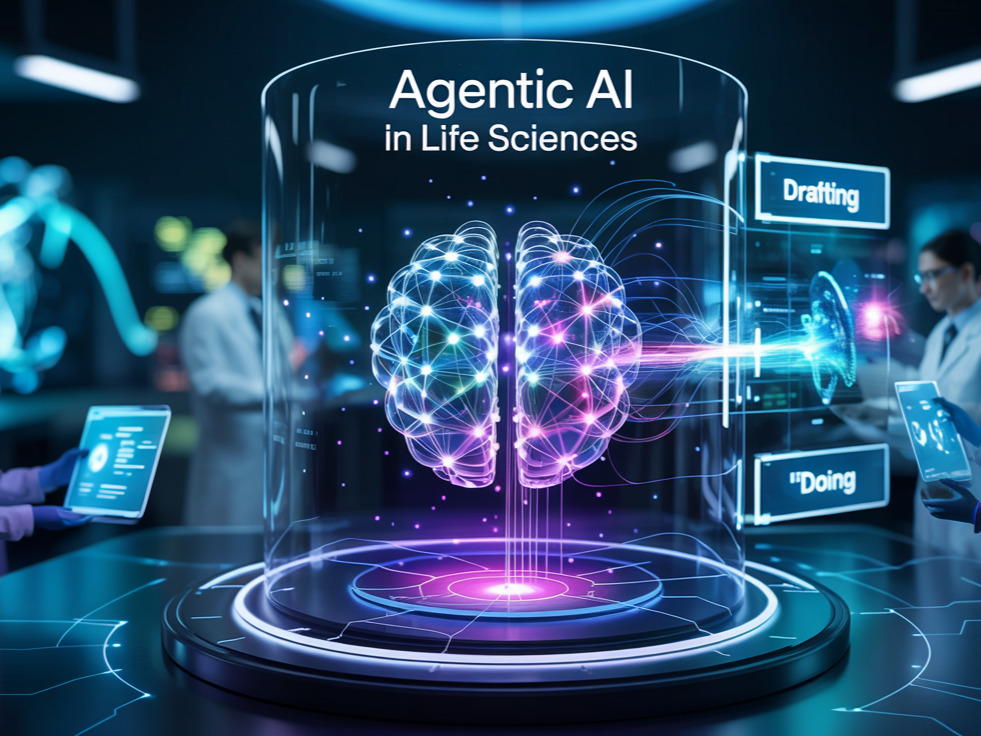
AI in Life Sciences - Agentic vs. Generative or from "Drafting" to "Doing"
Next frontier is Agentic AI. Unlike its predecessor, Agentic AI does not just passively draft. Rather, it acts.
For Life Science leaders, the distinction is deeply strategic. Understanding the difference between "creating" and "doing" is the key to shaping a benefits case that delivers real ROI rather than just "efficiency theatre."

Eye on Global Responsibility - Smart Use of AI in Drug Discovery
The key shift is that AI is no longer an experimental add-on. Rather, Machine Learning is rapidly becoming a core part of discovery infrastructure: target discovery, lead identification, generative chemistry, predictive ADME/tox modelling, and even early clinical design. The potential is enormous and encouraging early results are already emerging. But alongside the excitement sits a growing recognition that AI-enabled drug discovery raises profound ethical, social, and regulatory questions that should also be considered, alongside the rush to implementation.

Precision Medicine: Finally Delivering on the Promise?
Precision medicine has been an aspiration for decades. Yet for many in Biotech and the Life Sciences, precision medicine has felt more like perpetual promise than a reality. However, that appears to be changing.
The convergence of AI, multi-omics (genomics, transcriptomics, proteomics, and metabolomics) technologies, and unprecedented data integration is finally transforming precision medicine from concept to clinical reality.

AI Health Apps: How to Win?
The AI health app market will continue growing rapidly. However, success is anything but granted.
In a crowded market, what distinguishes the winners?
For investors evaluating AI health apps, the decision framework is straightforward:
Does the app solve a workflow problem, a clinical need and/or costs institutions real money?
Is the business model based on recurring, defensible value?
Is the regulatory strategy proactive or evasive?
Is there a commitment to data improvement and governance?

Emerging AI Investment Bubble? A strategic briefing
The current wave of investment in artificial intelligence (AI) infrastructure is unprecedented in both scale and speed. Trillions of dollars are being committed to build global computing capacity intended to power next-generation AI models. While the technological potential is transformative, the economic fundamentals remain uncertain in the near term. The gap between investment expectations and projected revenues suggests growing systemic risk — with multiple indicators resembling past speculative bubbles. Although there is no doubt about the vast transformative potential of AI and long-term sustained business success, some form of correction appears to be inevitable. Such a correction may actually lead to more sustainable AI solutions in the future and the long-term economic promise remains exciting.
Fostering biotech start-up success -and outmanoeuvring key risks
Although life sciences are characterised by bold ideas and brilliant science, even the most promising biotech start-ups face daunting odds. Industry data suggest that fewer than one in ten biotech ventures reach sustainable success or an exit event.
The underlying reasons are rarely bad luck or weak science. More often, failure stems from strategic blind spots that emerge between discovery and delivery, where business discipline, market understanding, and executional excellence matter just as much as innovation itself.
In this blog we discuss the top five reasons biotech start-ups fail, and what founders, teams, and investors can do differently to mitigate, or even better outmanoeuvre these risks.

A New Data Economy for Life Sciences – or Why Access and Trust Now Define Value
From AI-enabled drug discovery to precision diagnostics, data drives model accuracy, regulatory confidence, and commercial readiness. Yet while technology is increasingly commoditised, high-quality, well-curated datasets are not.

Rethinking Investments and Growth in Life Science Services
For years, investors in Life Science support services had a clear formula for success: buy, integrate, scale, exit. And there were some very notable successes — at first.
But today, that strategy is no longer delivering the same outcomes.
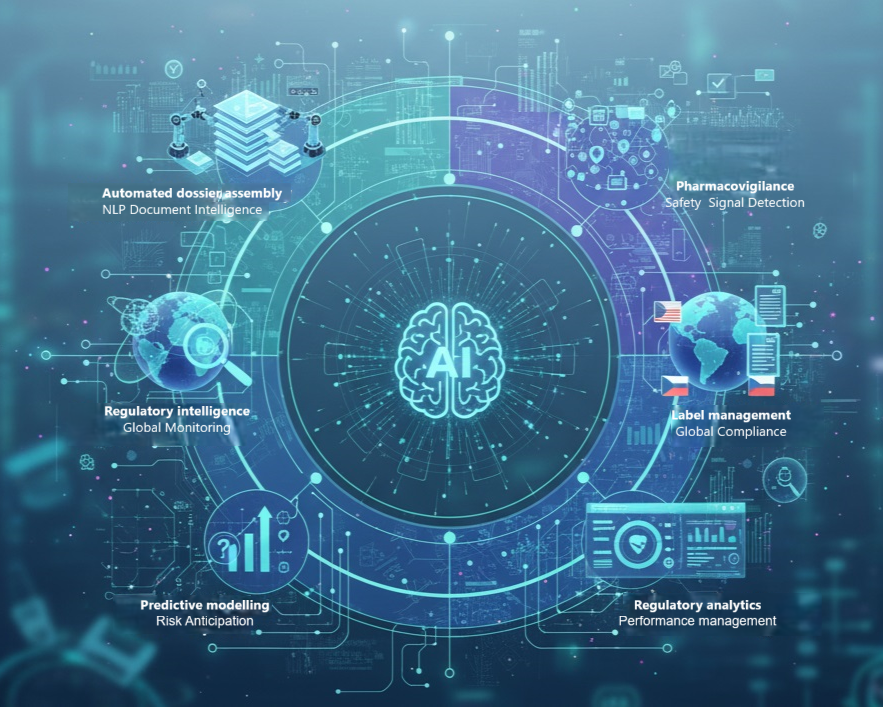
AI in Regulatory Affairs: Potential, Promise, and Path to Real Impact
AI will not replace regulatory professionals, but it will change the nature of their work and enable them to cope with the steadily rising flood of information.
By 2030, we can expect regulatory affairs to look markedly different: data-driven, predictive, and integrated across the product lifecycle, saving cost and meeting the demands of a rapidly evolving healthcare system.
Getting there will require smart capital, thoughtful governance, and sustained change management. But for those willing to navigate the barriers, the potential to transform one of the industry’s most important and complex functions is real — and well worth pursuing.
Recalibrating Biotech Investment: The Strategic Case for AI and Digital Health Innovation
In recent years, biotech investors have gravitated toward safer, later-stage opportunities, reflecting a natural response to volatile capital markets, rising development costs, and investor fatigue following the post-pandemic correction. While understandable, this narrowing of focus comes at a cost: the underfunding of early-stage innovation that historically has been the source of the sector’s most transformative growth.
Our analysis suggests that investors who re-evaluate opportunities at the convergence of artificial intelligence (AI), digital health, and biotechnology can position themselves for significant long-term returns while supporting the development of technologies poised to reshape global healthcare delivery.
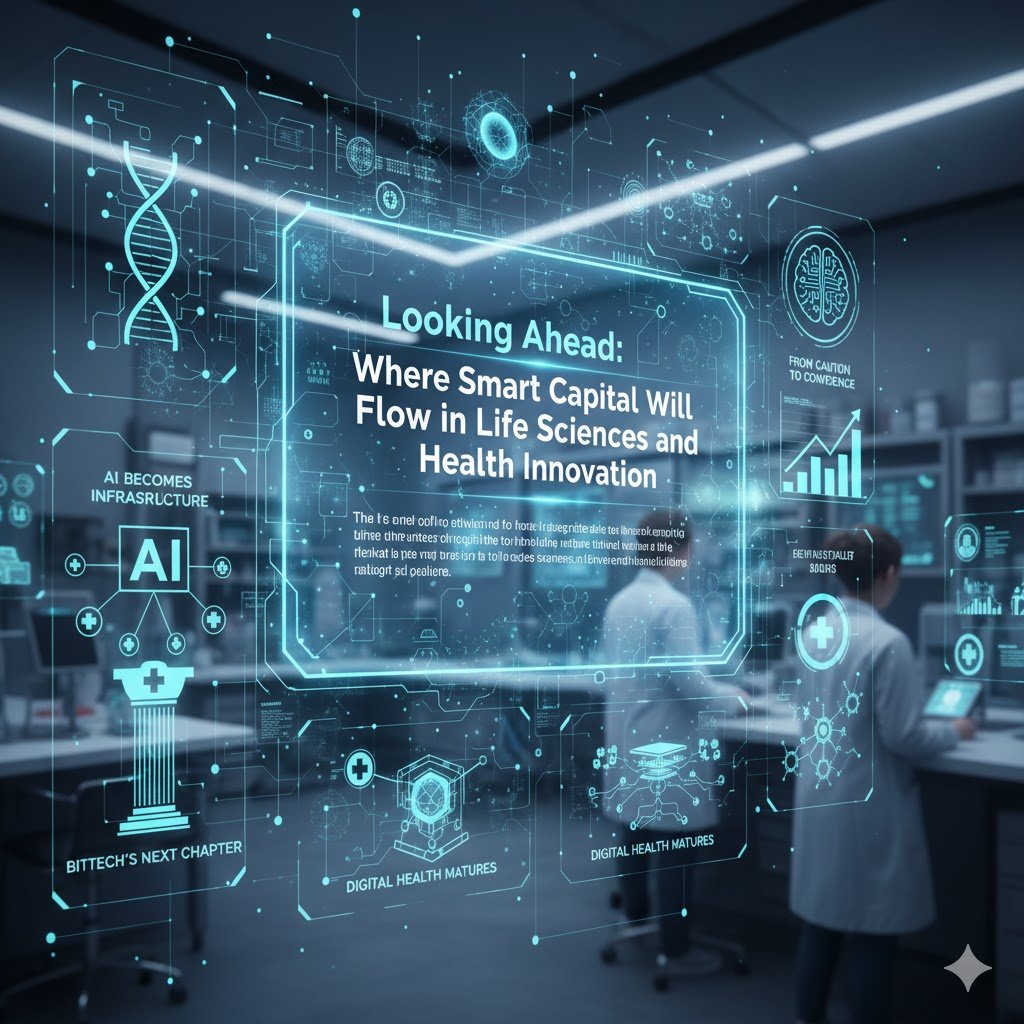
Looking Ahead: Where Smart Capital Will Flow in Life Sciences and Health Innovation
As we head towards the close of 2025, the investment landscape across biotech, digital health, and AI-enabled life sciences is entering a new phase — one necessarily defined not by recovery from a downturn per se, but by redefinition of opportunity.
The next investment cycle will reward clarity of vision and courage of conviction. Capital is returning, but it will concentrate around the companies and technologies that redefine how therapies are discovered, developed, and delivered.
For investors willing to look forward — beyond consolidation and incremental improvements — the opportunity is clear: this is the moment to back the innovators building the infrastructure of tomorrow’s life sciences industry.

Beyond “Buy-and-Build”: Rethinking Value Creation in Life Science Support Services
“Too big to fail” has outlived its usefulness. The future winners in Life Science Services won’t just be bigger — they’ll be smarter. For investors, that means moving beyond the comfort of the “buy-and-build” model and embracing a more nuanced, innovation-led approach to value creation.
Beyond “Safe Bets” - Why Investors Should Revisit Innovation in Biotech & Digital Health
The safer path is not always the more rewarding one. Investors who bring rigor, vision, and a willingness to embrace innovation will be those best positioned to unlock the next wave of biotech and digital health breakthroughs. And gaps in subject matter expertise or innovation can be bridged with a trusted partner …

From Biomarkers to Approvals: How Digital Tools Are Accelerating Drug Development
Drug development has historically been famously slow, expensive, and complex. On average, it can take over a decade and billions of dollars to bring a new therapy to market. For patients with urgent needs (especially in rare or life-threatening diseases) and in the light of “personalised medicine” becoming reality — that requires acceleration. This is where digital tools, particularly digital biomarkers and digital endpoints, are beginning to change the game.
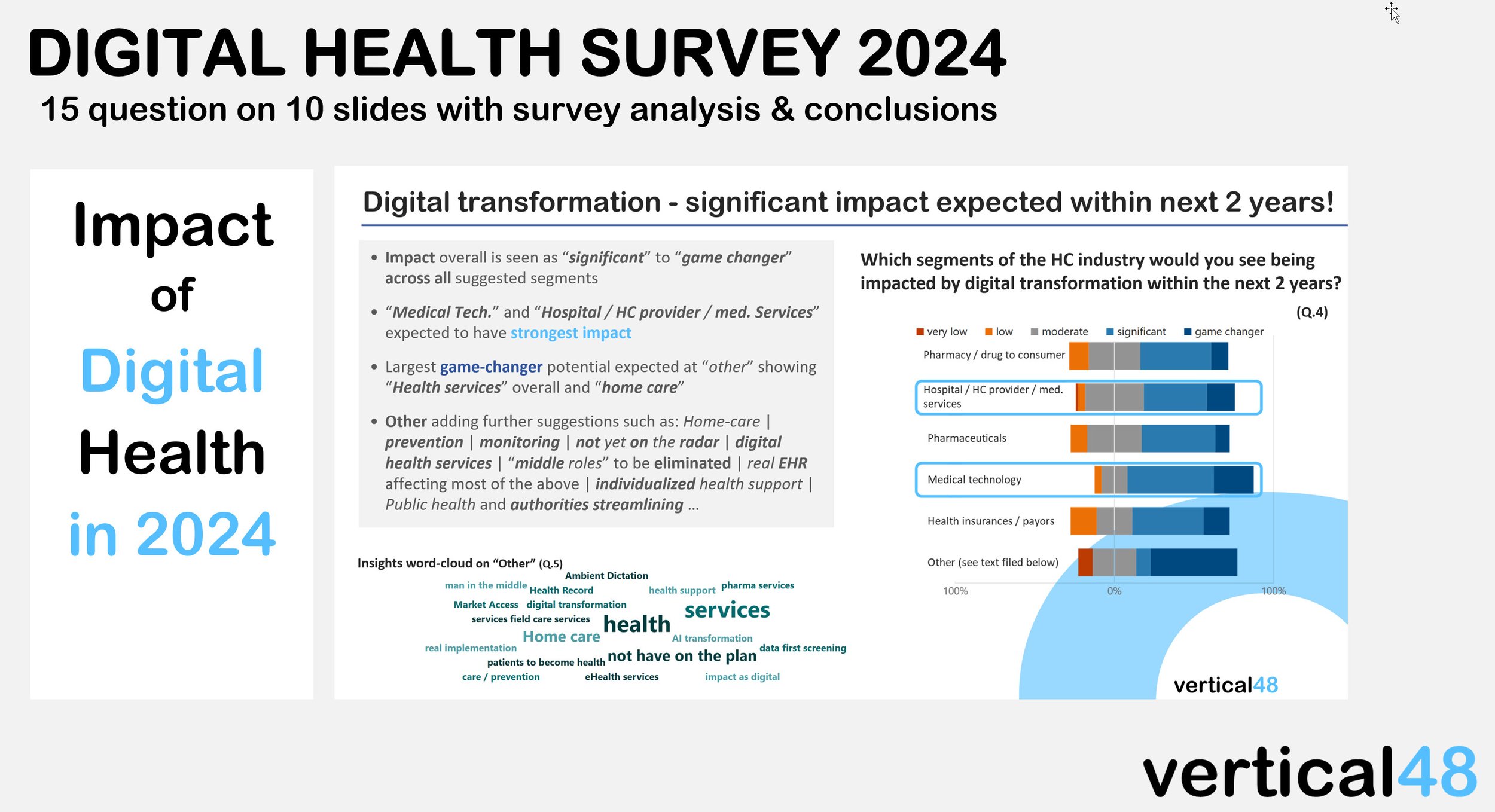
Digital Health Impact Survey 2024 (Copy)
5 Key take-aways …
Game-Changer: Across domains, segments & technologies the expectation on the impact of digital health is very high to game-changer
Sweet-spot: Recent inflation of break-throughs is paving the way for ground-breaking & inevitable change, with themes like “taking the middle-man out” and “direct to … e.g. consumer” being often quoted
Play smart: Sustainable new opportunities arising from the proliferation of possibilities - if being played smart
Diagnostics before therapeutics: Indication that Lab- and diagnostics-business will be affected fast and strong with no option to swing back
Commitment & focus: Continued commitment, focus and getting strategy & benefits right is crucial to success given the change ahead …

Digital Health vs. Digital Healthcare: Why the Difference Matters
When you scroll through LinkedIn or attend an industry event, you’ll notice that terms like digital health and digital healthcare often get used interchangeably. At first glance, they sound similar — and many people use them as synonyms. But if you dig a little deeper, the distinction is important, especially for life sciences and healthcare leaders who are deciding where to invest and innovate.
So what is the difference, and why does it matter?

Ten things new employees may expect from you as their leader ...
New employees are eager to contribute and develop themselves. As a leader, meeting these expectations is essential to fostering long-term success

High performing teams - potential during shaky times
Improving team communications
Certainly there is now one magic bullet to build and run high performing teams, However, respecting and following some basic ground-rules can help to improve team-performance significantly. One of those ground-rules touches team communications.